The Engadget Mobile Interview: Jonathan Schwartz, CEO of Sun
Q: In terms of Java on mobile platforms, a couple years back you guys picked up SavaJe and shortly thereafter announced the JavaFX Mobile platform, but we really haven't heard anything about that since...
A: Well I invite you to attend the JavaOne conference where we will be unveiling exactly what that looks like now. Because we have obviously made a huge amount of progress. And look, we are going to be delivering an open source phone. That doesn't happen overnight, but when it does happen I think it will fundamentally change the economics of the marketplace and create new opportunities for developers.
Sell your JAVA stock short, if you think Steve's Little Pony honestly believes that an open source phone will "fundamentally change the economics of the marketplace" for phones, in a way that an open source desktop operating system has failed, after trying since about 1991, to fundamentally change the economics of the marketplace for desktop computers. Steve's Little Pony ought to know this lesson by heart. After all, Linux, even while failing over and over and over to make even a dent in the desktop market, managed to seriously disrupt the server market, Sun's core market, to the point where all the major players except Apple and Microsoft feel compelled to offer Linux alternatives to their own server operating systems.
Steve's Little Pony continues his answer.
"Right now we estimate we have about a 1.5 to 2 billion Java runtimes on phones out there so we are on the majority of all phones, certainly the huge majority of the new phones (Apple is probably the one exception). And that creates lots of opportunities for developers -- that's our core constituency and I think we can just continue to build innovations that they care about.
But what they ultimately care about, the one innovation that they all care about is volume. So the fact that they can run an app on a billion phones means that they have a billion times the market opportunity than if they just run on one that has four million devices. "
Just like web browsers, Java is on a billion and a half phones... in the pockets of people who don't even realize their phone has a browser and don't know what Java is. As is the case with web browsers on phones, Java performs poorly and the interface of the phone is so cumbersome that all of the top technology companies in the world have failed to turn two billion phones into a market at all.
See, Java is on a billion or so PCs in the world, too, give or take. How has that market played out for the third party ISV? Oh, that's right. There really aren't any third party ISV making desktop software in Java, on any desktop platform, because the user experience sucks. The only people building applications like that right now are producing custom applications for the enterprise. The users of those systems will tell you, almost universally, those applications suck. The users hate the applications, and all Sun gets out of it is a stain on the Java brand. IBM and their stable of $10.00 per hour programming sweat shops in India are getting all the revenue.
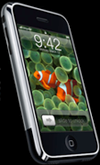
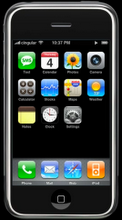
Apple's market with a base of what is now closer to 10 million phones, plus several million iPods Touch, might even be larger than the Java market on 2 Billion phones, in terms of potential revenue. By this time next year, we'll know the answer to that one.
Although I'm pretty keen on market share dominance, if you can't monetize that market share, it's just technological masturbation, like XBOX.
If you can't even deliver something that customers even realize they bought, then it's not even masturbation, it's just exposing your unit share in public, like Internet Explorer.
The curious part is that other players like IBM have managed to monetize Java to some degree, yet Sun has never really been able to do it, and for some reason doesn't seem much interested in emulating the success of the players who have done it, with Sun's own product.
Maybe Steve's Little Pony is afraid to score.